 Reviews


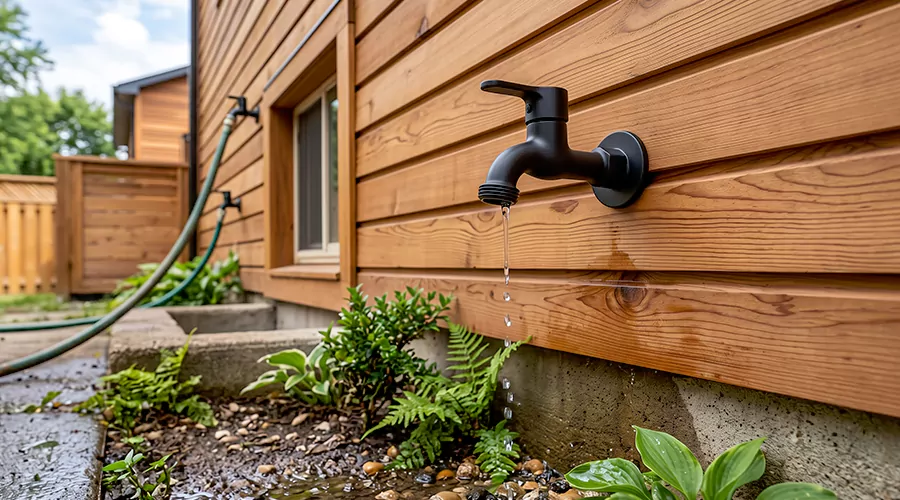
An outdoor faucet commonly leaks because its stem washer has worn out or the packing around its handle no longer seals correctly. Water escaping from an anti-siphon device or a frost-damaged connection can indicate a different problem. Professional outdoor faucet repair costs approximately $100–$300 in the United States in 2026. Faucet replacement may be needed when an outdoor faucet is severely damaged, corroded, or no longer seals properly after repair.
Outdoor faucets are exposed to changing weather conditions and frequent hose connections.
The most useful diagnostic clue is where the water escapes. A leak at the spout requires different attention from water appearing around the handle or near the wall.
What Are the Most Common Causes of Outdoor Faucet Leaks?
Outdoor faucets contain sealing components that wear over time. Additional components may provide backflow protection or help prevent damage during freezing conditions.
Common causes include:
- Worn stem washer: Water continues dripping from the spout when the valve is closed.
- Loose packing nut: Water escapes around the handle during operation.
- Damaged stem packing: A worn seal allows water to pass along the valve stem.
- Failed hose washer: Water leaks where the garden hose attaches.
- Vacuum breaker problem: Water escapes from the backflow-prevention assembly.
- Freeze damage: Trapped water expands and damages the faucet or connected piping.
- Corroded components: Internal or external deterioration prevents proper sealing.
Angi identifies worn washers and loose packing nuts as common outdoor faucet leak causes.
How Can You Identify the Leak Location?
Outdoor faucet leaks produce different symptoms depending on which component has failed.
Begin by disconnecting the garden hose when it is safe to do so.
| Leak Location | Possible Cause | Initial Check |
|---|---|---|
| Spout while faucet is off | Worn stem washer | Inspect shutoff components |
| Around handle while running | Loose packing or damaged seal | Inspect packing nut |
| Hose connection | Missing or worn hose washer | Inspect hose fitting |
| Top of anti-siphon assembly | Vacuum breaker problem | Identify the device |
| Near exterior wall | Connection or freeze damage | Check surrounding moisture |
| Inside wall during use | Damaged frost-free faucet or supply pipe | Stop use and isolate water |
The location is more useful than the age of the faucet alone.
A hose connection leak does not automatically mean the outdoor faucet needs replacing.
How Does an Outdoor Faucet Leak Progress?
A small outdoor faucet drip can waste water for extended periods because the fixture may not receive daily attention.
Leaks near the building also create additional concerns when moisture reaches the wall.
| Stage | Typical Symptoms | Possible Consequence | 2026 Cost Reference |
|---|---|---|---|
| Early | Occasional spout drip | Water waste | Minor parts replacement |
| Developing | Handle leaks during operation | Worn packing | 100–300 faucet repair |
| External connection | Water escapes near hose | Water loss during use | Often an accessible repair |
| Severe | Cracked faucet or pipe | Water damage | May require replacement |
| Replacement | Complete fixture failure | New outdoor faucet required | 120–500 |
The average U.S. outdoor spigot replacement cost is approximately $250 according to April 2026 pricing data.
What Warning Signs Indicate an Outdoor Faucet Problem?
An outdoor faucet may develop symptoms slowly. Seasonal inspections help identify damage that could otherwise remain unnoticed.
Watch for these warning signs:
- Water drips from the spout after shutoff.
- Water escapes around the handle.
- The packing nut develops visible moisture.
- Water sprays from the hose connection.
- The vacuum breaker releases water during operation.
- The handle becomes difficult to turn.
- Corrosion appears around the valve body.
- Water collects near the building's foundation.
- Dampness appears on the interior wall.
- The leak becomes more noticeable after freezing weather.
Water appearing inside the wall deserves particular attention.
A damaged frost-free faucet may leak inside the building when water is turned on.
Why Does My Outdoor Faucet Drip When Turned Off?
A persistent drip from the spout usually indicates that the faucet's internal shutoff seal is no longer working correctly.
Many conventional outdoor faucets use a washer at the end of the valve stem.
When the handle closes, the washer presses against a valve seat and stops water flow.
Repeated use gradually wears the washer.
Angi's outdoor faucet repair guidance identifies this washer as a common cause of spout dripping.
A damaged valve seat can also prevent a new washer from sealing correctly.
Match any replacement washer to the faucet design.
Why Does Water Leak Around the Outdoor Faucet Handle?
Water escaping around the handle commonly indicates a problem with the stem packing or packing nut.
The packing forms a seal around the moving valve stem.
Over time, this seal may loosen or deteriorate.
An accessible packing nut can sometimes be adjusted carefully.
However, excessive tightening may make the handle difficult to operate or damage the component.
If adjustment does not stop the leak, the packing may require replacement.
Shut off the water supply before disassembling the valve stem.
Can the Hose Connection Cause the Leak?
Yes. A garden hose normally contains a sealing washer inside its threaded connector.
The washer prevents water from escaping where the hose attaches to the faucet.
A missing or damaged washer can cause spraying during use.
To investigate:
- Turn off the outdoor faucet.
- Release pressure from the hose.
- Disconnect the hose.
- Inspect its internal washer.
- Check the faucet threads for visible damage.
- Replace a defective hose washer.
- Reconnect the hose correctly.
- Test the connection.
The EPA recommends inspecting garden hose connections and replacing damaged sealing washers when leaks occur.
What Is a Vacuum Breaker and Why Can It Leak?
Some outdoor faucets include an anti-siphon vacuum breaker.
The device helps prevent contaminated hose water from flowing backward into the property's drinking-water supply.
A damaged internal component can cause water to escape from the assembly during operation.
However, some brief discharge can be normal depending on the design.
Inspect the manufacturer's instructions before assuming the device has failed.
Never remove or permanently bypass required backflow protection as a way to stop a leak.
A defective assembly should be repaired or replaced with an appropriate compatible component.
Can Freezing Weather Damage an Outdoor Faucet?
Yes. Water left inside a faucet or connected hose can freeze during sufficiently cold weather.
Water expands as it freezes and can damage the faucet body or connected piping.
Frost-free faucets are designed to place the main shutoff farther inside the building.
However, leaving a hose attached can prevent the exterior section from draining correctly.
Woodford's manufacturer guidance explains that a hose left attached during freezing weather can trap water inside a frost-proof faucet and cause it to burst.
A faucet that begins leaking after winter should be inspected carefully before normal operation resumes.
How Can You Test an Outdoor Faucet Leak?
A controlled test can help identify whether the problem involves the valve or hose connection.
Follow these steps:
- Disconnect the garden hose.
- Dry the outdoor faucet.
- Check whether water drips while the handle is closed.
- Turn the faucet on briefly.
- Inspect the handle area.
- Observe the vacuum breaker.
- Turn the faucet off.
- Reconnect the hose.
- Test the hose connection separately.
- Inspect the surrounding wall for moisture.
Stop testing if water appears inside the wall or behind the faucet's mounting area.
The problem may involve damaged piping rather than an accessible washer.
How Much Does Outdoor Faucet Repair Cost in 2026?
Outdoor faucet repair costs depend on the failed component and whether the problem involves damage inside the wall.
| Repair or Replacement | 2026 U.S. Cost |
|---|---|
| Basic DIY repair supplies | 0–50 |
| Professional outdoor faucet repair | 100–300 |
| Standard outdoor spigot replacement | 120–250 |
| Frost-free spigot replacement | 180–350 |
| Broader outdoor spigot replacement | 120–500 |
These prices reflect published 2026 U.S. cost estimates. Hidden pipe repairs may add substantially to the total.
When Should You Call a Professional?
Professional assistance is appropriate when the faucet body is damaged or the leak appears to extend inside the building.
Seek help when:
- Water appears inside the wall.
- The faucet body is cracked.
- Freeze damage is suspected.
- The supply connection is inaccessible.
- A replacement washer does not stop the leak.
- The valve cannot be isolated safely.
- The surrounding wall shows signs of water damage.
A frost-free faucet with a cracked internal tube should not be treated as an ordinary handle-seal problem.
How Can You Prevent Outdoor Faucet Leaks?
Outdoor faucet maintenance should account for regular wear and seasonal temperature changes.
Recommended habits include:
- Inspect the faucet for dripping after use.
- Check garden hose washers.
- Disconnect hoses before freezing weather.
- Drain outdoor connections when required.
- Inspect accessible components after winter.
- Avoid forcing stiff handles.
- Check for moisture around the wall connection.
Frost-free faucets must be installed and maintained according to the manufacturer's instructions to provide their intended protection.
Conclusion
If your outdoor faucet is leaking, identify the location before selecting a repair. A spout drip commonly indicates a worn washer, while moisture around the handle can involve stem packing.
Inspect hose connections separately and check for freeze damage when the leak appears after winter. Water escaping inside the wall or from a cracked faucet body may require professional repair. Disconnecting hoses before freezing weather helps reduce future damage.
Frequently Asked Questions
Why does my outdoor faucet drip when turned off?
The internal stem washer may be worn or the valve seat may be damaged.
Can I tighten an outdoor faucet that leaks around the handle?
Some designs allow careful packing-nut adjustment. Follow the manufacturer's instructions and avoid excessive force.
Why does my outdoor faucet leak only when a hose is attached?
The hose washer or connection may be damaged. A vacuum breaker problem is another possibility.
Can a frost-free faucet still freeze?
Yes. Improper installation or a hose left attached can prevent proper drainage.
Should a cracked outdoor faucet be repaired or replaced?
A cracked faucet body generally requires replacement rather than a simple washer repair.